Philadelphia, PA · Updated
Find out if a pool fits your Philadelphia yard — then meet one builder who can build it.
Philadelphia inground pool installation: real prices, one local pro
Inground pool installation in Philadelphia, PA typically costs between $47,150 and $92,500, with a typical job including excavation, construction, and permits. A barrier requirement for every pool is mandated by local code (Swimming Pool and Spa Safety (Philadelphia L&I / OEM leaflet)). Philadelphia does not require a zoning permit for a swimming pool installed on the property of a one- or two-family dwelling (Get a Zoning Permit (City of Philadelphia L&I)).
Free for anyone in Philadelphia. You learn your one pro's name first.
- Pro's name before contactYou hear the pro's name from us before they call. Ask them for their license number and check it yourself. Check a license at hicsearch.attorneygeneral.gov
- One pro, not a listWe tell you who before they call.
- Free for you — pros pay usNo job payment passes through us. You contract with and pay the independent pro directly. We never bid on or do the work.
- Updated October 2026Every price on this site shows its source and date.
Ballpark first
What inground pool installation costs in Philadelphia
Local pool build price table for Philadelphia
| Job | Low | Typical | High | Source |
|---|---|---|---|---|
| Inground pool installation | $47,150 | $66,050 | $92,500 | angi.com, nerdwallet.com, 2026-09 |
| Pool resurfacing | $6,450 | $10,150 | $16,100 | angi.com, 2026-09 |
Typical ranges from public data (angi.com, nerdwallet.com; September 2026), not a quote — your contractor's written contract sets the price.
A estimated band, not a quote. Prices as of Sep 2026.
Before you ask
Is this free?
Yes. Matching is free for homeowners. The pro pays us a fee for the introduction. You never pay us, and no job payment passes through us.
Will lots of companies call me?
No. We match each request with one pro, and we tell you who before they contact you.
What if you can't find a pro?
We email you within 1 business day, and we delete your request from our matching queue.
Three steps
How matching works
One short form, one named Philadelphia pro, and you decide what happens next.
- Tell us the job. Use the 2-minute form.
- We find one matched Philadelphia pro. We tell you who before your number goes to them, or tell you if we can't match you.
- You decide. The pro quotes. If you go ahead, you contract with and pay the pro directly. We don't perform or bid on the work. Matching is free; the pro pays us, not you.
Services
Inground Pool Installation services in Philadelphia
Choose a service for its Philadelphia price range, permit notes and timing.
Costs · FAQ · Get matched
Start here
When does it need doing?
Different Philadelphia timelines need different first moves, from stopping damage to budgeting.
Now
A cracked shell or leaking equipment on an existing Philadelphia pool — shut the pump off and send details.
Tell us the jobThis week
Booking a site visit this month in Philadelphia — start now to leave time for approvals.
Book a visitJust budgeting
Comparing gunite, fibreglass and vinyl in Philadelphia — the dated ranges show each.
Try the estimator
Why Philadelphia differs
Philadelphia facts that shape a inground pool installation job
Sourced local numbers that explain why Philadelphia quotes look the way they do.
- 1949 median year homes were built ACS 5-year 2020-2024, B25035 Median Year Structure Built
- 83% of homes built before 1980 ACS 5-year 2020-2024, B25034 Year Structure Built
- 137 pool permits in the last 12 months (city open data) City open-data permit layer (probed 26 Sep 2026)
More local data
- $25 a sourced city permit fee line (full list in the permit table) City of Philadelphia - Get a Building Permit
Home age chart for Philadelphia
Good to know
DIY limits for pool build in Philadelphia
A homeowner in Philadelphia may not need a hired pro for minor repairs or maintenance if they have the skill and tools. However, for full installation, permits are required (Swimming Pool and Spa Safety (Philadelphia L&I / OEM leaflet)), and excavation must be done by licensed contractors (Submit as a PA Home Improvement Contractor to get construction permits (City of Philadelphia)). A repair-only quote is a cautious route unless fully confident in the work.
Read the rest
One matched pro, not a list
We're lining up one Philadelphia pool build pro. We'll email you the name of the Philadelphia pro we match you with within 1 business day. If we can't match you with a Philadelphia pro, we'll email you that too. Your number goes to that pro only after you've heard their name from us.
Before your number goes to anyone, we tell you the pro's name, so you can ask for their license number and check it yourself. How matching works.
Your questions
Questions Philadelphia homeowners ask
Common questions about inground pool installation in Philadelphia
How much is a private pool in Philadelphia?
A private inground pool in Philadelphia costs between $47,150 and $92,500, with an average of around $66,050. This includes excavation, construction, permits, and installation by licensed professionals.
What license should a pool builder in Philadelphia hold if L&I guidance requires in-ground pools?
A Philadelphia contractor license is not needed for work only on existing one- or two-family dwellings without special-trade work; such firms register as Home Improvement Contractors after state registration (City of Philadelphia - Get a Contractor License).
How often does gunite pool need resurfacing in Philadelphia with L&I guidance?
Gunite pools typically need resurfacing every 10-15 years, depending on usage and region. This is based on general trade knowledge about pool plaster longevity (NAHB/Bank of America Home Equity, Study of Life Expectancy of Home Components (Feb 2007), Table 1).
Across Philadelphia
Service area
Philly Pool Build Guide takes requests from homeowners anywhere in Philadelphia and matches each one with an independent local pro by ZIP code. Philly Pool Build Guide has no office or crew in Philadelphia; the pro you are matched with quotes and does the work.
Parts of Philadelphia we cover
- Fishtown
- Northern Liberties
- Queen Village
- Manayunk
- Roxborough
- Fairmount
- Graduate Hospital
- Mt. Airy
- Chestnut Hill
- Point Breeze
- East Passyunk
Where you can send a request
Reference
The Philadelphia inground pool installation guide
Costs, permits, timing and what to ask in Philadelphia, all sourced; open it for the detail.
On this page · 19 sections
Why Philly Pool Build Guide
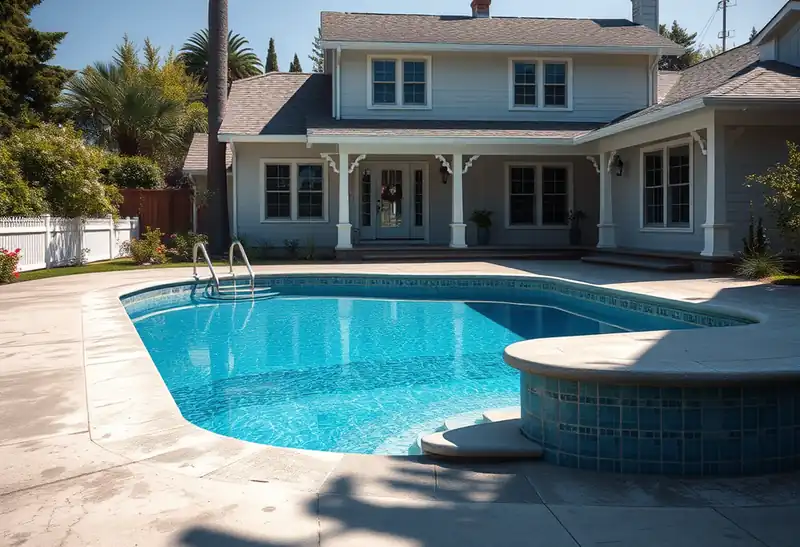
What is the typical price range for an inground pool installation in Philly?
In Philadelphia, an inground pool installation typically ranges from $47,150 to $92,500, depending on materials and design choices. Concrete pools tend to be more expensive upfront but last longer.
The cost of a concrete pool in Philadelphia is usually at the higher end of the price range due to the durability and longevity of this material. These pools have a service life of 25+ years, as noted by industry standards (NAHB/Bank of America Home Equity, Study of Life Expectancy of Home Components (Feb 2007), Table 1). However, the initial investment is significant, and factors like size, shape, and additional features can further increase the price. Vinyl liner pools are generally more affordable but require replacement every 5-9 years, which adds to long-term costs (This Old House, "What to Know About Pool Resurfacing" (C. Bickford, updated 2026-06-06)). Fiberglass pools offer a mid-range option with a factory-applied gelcoat surface that degrades over time due to UV and chemical exposure (This Old House, "What to Know About Pool Resurfacing" (C. Bickford, updated 2026-06-06)).
When considering the lifespan of pool finishes, pebble aggregate options like Pebble Tec can last 25-35 years, making them a long-term investment (NAHB/Bank of America Home Equity, Study of Life Expectancy of Home Components (Feb 2007), Table 1). Pool decking also plays a role in overall cost, with materials like concrete or pavers lasting around 15 years (NAHB/Bank of America Home Equity, Study of Life Expectancy of Home Components (Feb 2007), Table 1). These considerations influence both the initial price and future maintenance expenses.
The choice of material affects not only the upfront cost but also how often maintenance or replacement will be needed. For example, plaster surfaces can degrade over time due to wear and water chemistry (www.thisoldhouse.com). Similarly, UV exposure can cause gelcoat on fiberglass pools to break down more quickly (www.thisoldhouse.com). These factors should be weighed when deciding between materials that may offer longer service life but higher initial costs. Understanding these trade-offs helps in making a well-informed decision about the type of pool best suited for your home.
How much a concrete pool costs in Philadelphia?
Concrete pools typically cost more upfront but offer long-term durability. Their service life is 25+ years, making them a high-cost but low-maintenance option (NAHB/Bank of America Home Equity, Study of Life Expectancy of Home Components (Feb 2007), Table 1).
What changes the price in Philadelphia
Local rules and conditions that affect what to do, pick or pay for this job, with sources.
| Local rule or condition | What it changes | Source |
|---|---|---|
| Philadelphia requires a building permit for in-ground pools; the only pool exemption is for prefabricated pools or spas under 24 inches deep and under 5,000 gallons | You must get a building permit for in-ground pools unless it is a prefabricated pool or spa under 24 inches deep and under 5,000 gallons (source). | Get a Building Permit (City of Philadelphia L&I) |
| Philadelphia's swimming pool building permit fee is $69 for a one- or two-family dwelling and $253 each for other occupancies (schedule effective Jan 1, 2025, rev. Feb 2026) | The swimming pool building permit fee is $69 for one- or two-family dwellings in Philadelphia (source). | Summary of Construction Permit Fees, effective 1/1/2025, Rev 2.2026 (Philadelphia L&I) |
| Philadelphia requires separate electrical and plumbing permits for pool installations, with that work done by licensed professionals | Electrical and plumbing work for the pool must be done by licensed professionals and require separate permits (source). | Swimming Pool and Spa Safety (Philadelphia L&I / OEM leaflet) |
| Philadelphia does not require a zoning permit for a swimming pool installed on the property of a one- or two-family dwelling | No zoning permit is needed for a swimming pool on the property of a one- or two-family dwelling (source). | Get a Zoning Permit (City of Philadelphia L&I) |
| Philadelphia electrical permits cost $25 per $1,000 of estimated electrical construction cost, minimum $63 and maximum $18,975 | The electrical permit cost depends on the estimated construction cost, with a minimum fee of $63 and maximum of $18,975 (source). | L&I Summary of Construction Permit Fees (effective Oct 1, 2026; Rev 7.2026) |
| Enforcement of the 2021 I-code accessibility provisions is enjoined by a 2022 Commonwealth Court ruling, so the 2018 accessibility provisions stay in effect in Philadelphia | Accessibility provisions from 2018 remain in effect instead of the 2021 I-code standards for Philadelphia (source). | L&I Code Bulletin B-2501 Implementation of 2021 International Codes (Oct 20, 2025) |
Illustrative example based on the public data cited on this page (October 2026), not a quote — your contractor's written contract sets the price.
Choosing between above ground and inground pools in Philadelphia
In Philadelphia, choosing between above ground and inground pools involves considering cost, space, and local regulations to ensure the right fit for your home and lifestyle. Philadelphia L&I requires in-ground pools to maintain a distance from property lines equal to their depth (Swimming Pool and Spa Safety (Philadelphia L&I / OEM leaflet)). This affects placement options.
Above ground pools are more flexible but may not align with a long-term vision for backyard use. Inground pools, whether vinyl or steel wall, typically cost between $47,150 and $92,500 depending on size and features. A steel wall inground pool installation in Philadelphia usually falls toward the higher end of this range due to materials and labor costs.
Philadelphia's L&I guidance requires a barrier for every pool, such as a 48-inch enclosure with a self-closing, self-latching gate (Swimming Pool and Spa Safety (Philadelphia L&I / OEM leaflet)). This applies to both above ground and inground pools. Above ground pools may require less structural work but still need compliance with local safety rules. Inground vinyl or concrete pools can offer greater customization and longevity, though they are more expensive to install. Pool decking typically lasts 15 years (NAHB/Bank of America Home Equity, Study of Life Expectancy of Home Components (Feb 2007), Table 1), so durability should factor into the decision between above ground and inground options. In Philadelphia, the choice between above ground and inground pools is influenced by cost, space, and local code requirements.
When considering pool installation in Philadelphia, it's important to understand how materials affect long-term maintenance. For example, tile interior finishes last 15–25 years (NAHB/Bank of America Home Equity, Study of Life Expectancy of Home Components (Feb 2007), Table 1), which means less frequent replacement compared to other options. Vinyl inground pools may be more affordable initially but could require re-plastering over time due to exposure to water chemistry and region-specific conditions (www.thisoldhouse.com). Fiberglass pools are resistant to UV degradation but may need cleaning equipment replaced every 7–10 years (NAHB/Bank of America Home Equity, Study of Life Expectancy of Home Components (Feb 2007), Table 1)
What does an inground vinyl pool construction cost in Philadelphia?
The lower end reflects basic models, while higher costs include custom finishes and larger sizes. Vinyl is a popular choice for its affordability.
Permits in Philadelphia
| Item | Fee | Source |
|---|---|---|
| The Philadelphia building permit filing fee is $25 for one- or two-family dwellings and $100 for other occupancies, plus a $3 city and $4.50 state surcharge per permit. (City of Philadelphia - Get a Building Permit) | $25 | City of Philadelphia - Get a Building Permit, 2026 |
| From October 1, 2026, Philadelphia alteration permits for 1-2 family homes cost $76 for the first 500 sq ft plus $56 per additional 100 sq ft; applicants may instead pay 2% of construction cost (min $253). (L&I Summary of Construction Permit Fees (effective Oct 1, 2026; Rev 7.2026)) | $76 | L&I Summary of Construction Permit Fees (effective Oct 1, 2026; Rev 7.2026), 2026-10-01 |
Illustrative example based on the public data cited on this page (October 2026), not a quote — your contractor's written contract sets the price.
Permit rules from City of Philadelphia - Get a Building Permit, dated 2026-10-01. Rules change — confirm with the Philadelphia building/permit office before you start.
Steps involved in building an inground pool in Philadelphia
Building an inground pool in Philadelphia starts with permits and planning. Local rules determine what you must apply for and who can perform the work. Knowing these steps ensures your project follows code requirements and avoids delays.
Apply through L&I’s eCLIPSE portal (City of Philadelphia - Get a Building Permit), paying the $69 fee for one- or two-family homes (Summary of Construction Permit Fees, effective 1/1/2025, Rev 2.2026 (Philadelphia L&I)). This ensures compliance with Pennsylvania’s 2021 International Swimming Pool & Spa Code (2021 ICC Code Adoption Final Report (PA Dept of Labor & Industry, RAC)).
Electrical and plumbing permits must be handled by licensed professionals for all pool installations (Swimming Pool and Spa Safety (Philadelphia L&I / OEM leaflet)). Permit fees include a $25 base charge with additional city and state surcharges (City of Philadelphia - Get a Building Permit), covering administrative costs. Always confirm with a pro if your design includes nonstandard features.
Pool decking typically lasts 15 years, while cleaning equipment may need replacement every 7 to 10 years (NAHB/Bank of America Home Equity, Study of Life Expectancy of Home Components (Feb 2007), Table 1). This helps in planning maintenance and repair timelines. Knowing these details can help you budget for long-term care of your pool area and ensure it aligns with local code requirements over time, including the 2021 International Swimming Pool & Spa Code (2021 ICC Code Adoption Final Report (PA Dept of Labor & Industry, RAC)).
What steps are involved in building an inground pool in Philadelphia?
Start with a building permit, then excavation and installation. Electrical and plumbing work must be done by licensed pros (Swimming Pool and Spa Safety (Philadelphia L&I / OEM leaflet)). Prefabricated pools under 24 inches deep may not need some permits (Get a Building Permit (City of Philadelphia L&I)), but most require approval through L&I’s eCLIPSE portal (City of Philadelphia - Get a Building Permit).
What is the process for inground pool construction in Philadelphia?
Apply online via eCLIPSE, pay $69 for residential permits (Summary of Construction Permit Fees, effective 1/1/2025, Rev 2.2026 (Philadelphia L&I)), and ensure licensed professionals handle electrical and plumbing work (Swimming Pool and Spa Safety (Philadelphia L&I / OEM leaflet)). The 2021 International Swimming Pool & Spa Code guides construction (2021 ICC Code Adoption Final Report (PA Dept of Labor & Industry, RAC)), while decking typically lasts about 15 years (NAHB/Bank of America Home Equity, Study of Life Expectancy of Home Components (Feb 2007), Table 1).
Philadelphia permit fees for adding to a pool build quote
Philadelphia permit fees for adding to a pool build depend on the type of work and size of the project.
As of January 1, 2026, Philadelphia implemented the 2021 International Codes, including the 2020 NEC, which apply to electrical work (2021 ICC Code Adoption Final Report (PA Dept of Labor & Industry, RAC)). Electrical permits cost $25 per $1,000 of estimated construction value, with a minimum fee of $63 and maximum of $18,975 (L&I Summary of Construction Permit Fees (effective Oct 1, 2026; Rev 7.2026)). These rules ensure compliance with updated safety standards for all new or altered pool installations in the city.
Philadelphia requires separate electrical and plumbing permits for pool installations, with that work done by licensed professionals (Swimming Pool and Spa Safety (Philadelphia L&I / OEM leaflet)). Contractors in Philadelphia must check local code requirements before starting any pool installation. This helps ensure that all pool-related work meets current code requirements.
Philadelphia’s alteration permit fees for 1-2 family homes, effective October 1, 2026, are based on either square footage or a percentage of the construction cost. The first 500 sq ft costs $76, with additional 100 sq ft increments priced at $56 each (L&I Summary of Construction Permit Fees (effective Oct 1, 2026; Rev 7.2026)). These rules apply to any additions or modifications made during a pool build.
How can contractors look up permits needed for a pool build in Philadelphia?
Contractors should review the 2021 International Codes and Pennsylvania’s UCC regulations, which took effect on January 1, 2026 (2021 ICC Code Adoption Final Report (PA Dept of Labor & Industry, RAC)). They must also check for required electrical and plumbing permits, as these are mandatory for pool installations in Philadelphia (Swimming Pool and Spa Safety (Philadelphia L&I / OEM leaflet)).
Permit rules from 2021 ICC Code Adoption Final Report (PA Dept of Labor & Industry, RAC). Rules change — confirm with the Philadelphia building/permit office before you start.
Does Philadelphia weather affect pool build prices?
Philadelphia's weather patterns influence pool build timing and costs, particularly during wetter months like September. Local precipitation data and temperature norms help determine optimal construction windows.
Philadelphia averages about 73 days a year with 0.10 inch or more of precipitation, according to NOAA data (NOAA NCEI Annual/Seasonal Climate Normals 1991-2020, Philadelphia Intl Airport (USW00013739)). This means that during the building process, rain can delay concrete work and other outdoor tasks, which may increase overall project time and costs. Contractors often plan around these wetter periods to avoid interruptions. Pool construction typically requires dry conditions for proper curing and finishing, so scheduling is a key factor in controlling expenses.
September is among the wettest months in Philadelphia, contributing to delays if construction begins then. While the city’s annual precipitation totals 44.11 inches on average (NOAA NCEI Annual/Seasonal Climate Normals 1991-2020, Philadelphia Intl Airport (USW00013739)), seasonal variability can impact project timelines. Contractors may need additional equipment or labor to manage rain-related setbacks, which could affect the final price. Proper planning helps mitigate these risks and keeps costs aligned with estimates.
Philadelphia’s weather also includes 77 days annually where temperatures dip below freezing (NOAA NCEI Annual/Seasonal Climate Normals 1991-2020, Philadelphia Intl Airport (USW00013739)), though this is less relevant in summer construction. For pool builds, the focus is on avoiding rain during critical stages like excavation and concrete pouring. Scheduling around these conditions ensures quality and helps maintain budget expectations. The city’s average annual snowfall of 23.1 inches (NOAA NCEI Annual/Seasonal Climate Normals 1991-2020, Philadelphia Intl Airport (USW00013739)) doesn’t directly affect summer construction but influences planning for seasonal projects.
How does September's wettest weather impact pool building costs in Philadelphia?
September is among the wettest months in Philadelphia, with higher precipitation increasing the risk of rain delays. Contractors may need to adjust schedules or allocate additional resources for wet conditions, which can influence overall project costs.
How long common pool build options last and what to know (general industry sources, not local rules).
| Option | Typical service life | What to know | Source |
|---|---|---|---|
| Concrete pool shell | 25+ years | NAHB lists the concrete pool shell at 25+ years and 'swimming pool, general' as lifetime (source) | NAHB/Bank of America Home Equity, Study of Life Expectancy of Home Components (Feb 2007), Table 1 |
| Plaster interior finish | 10-15 years | NAHB lists pool plaster at 10-15 years (source) | NAHB/Bank of America Home Equity, Study of Life Expectancy of Home Components (Feb 2007), Table 1 |
| Pebble aggregate finish (e.g., Pebble Tec) | 25-35 years | NAHB lists Pebble-tec interior finish at 25-35 years (source) | NAHB/Bank of America Home Equity, Study of Life Expectancy of Home Components (Feb 2007), Table 1 |
| Tile interior finish / waterline tile | 15-25 years | NAHB lists tile interior finish at 15-25 years and waterline tile at 10 (source) | NAHB/Bank of America Home Equity, Study of Life Expectancy of Home Components (Feb 2007), Table 1 |
| Vinyl liner pool | 5-9 years | Liners never need resurfacing but usually need replacing after 5-9 years (source) | This Old House, "What to Know About Pool Resurfacing" (C. Bickford, updated 2026-06-06) |
| Pool decking | 15 years | NAHB lists pool decking at 15 years (source) | NAHB/Bank of America Home Equity, Study of Life Expectancy of Home Components (Feb 2007), Table 1 |
Home age in Philadelphia (Census data)
| Built | Share of homes | How derived | What this can change |
|---|---|---|---|
| 1939 or earlier | 39.9% | ACS | Lead-safe (RRP) paint rules (ACS 5-year 2020-2024, B25034 Year Structure Built) |
| 1940–1979 | 43.4% | estimated from ACS shares | Lead-safe (RRP) paint rules (ACS 5-year 2020-2024, B25034 Year Structure Built) |
| 1980–2009 | 10.6% | estimated from ACS shares | — |
| 2010 or later | 6.1% | ACS | — |
Checking a pool build quote in Philadelphia
- Scope of work includes excavation, construction, and compliance with L&I barrier requirements.
- Permits for electrical and plumbing are handled by licensed professionals (Swimming Pool and Spa Safety (Philadelphia L&I / OEM leaflet)).
- Inspections are conducted by a licensed electrical inspection agency (Get an Electrical Permit (City of Philadelphia L&I)).
- All permits and inspections must be coordinated with L&I ahead of installation.
A worked budget
A typical budget includes permits, excavation, and construction by licensed professionals.
| Line | Amount |
|---|---|
| Local band typical | $66,050 |
| Illustrative total | $66,050 |
Illustrative example based on the public data cited on this page (October 2026), not a quote — your contractor's written contract sets the price.
Local band quote check
$47,150–$92,500 per job
Next steps for your pool build project in Philadelphia
- Call 811 at least three to ten business days before digging for locate services (Homeowners (Pennsylvania One Call System)).
- Check the L&I office for permit requirements and submission guidelines.
What a typical job looks like
Animated diagram (computer-generated). Your own project may differ.
Guides for Philadelphia homeowners
Tell us the job
Let's start
Get matched with one Philadelphia pro
Two minutes of details, one named Philadelphia pro, and nothing to pay us.
- A Philadelphia name before any call
- Nothing to pay us
- One pro, not five
Before they contact you, we give you the pro's name. Ask them for their license number and check it yourself — look it up at hicsearch.attorneygeneral.gov.
Before they contact you, we give you the pro's name. Ask them for their license number and check it yourself — look it up at hicsearch.attorneygeneral.gov.